Meal Planning Without the Spreadsheet: A System That Survives Busy Weeks
A theme-night system built for the version of you that gets home at 6:40 — not the one who wrote the plan on Sunday.
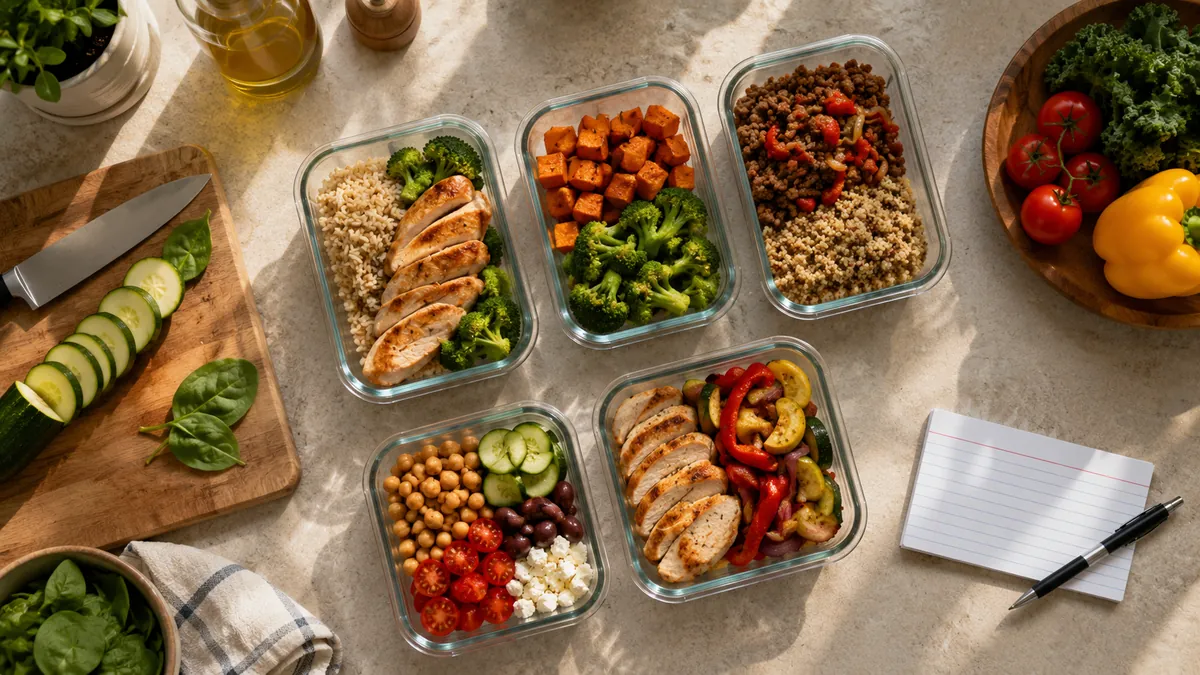
Meal planning fails for a predictable reason: the plan is written by Sunday You — rested, optimistic, browsing recipes with a coffee — and executed by Wednesday You, who got home at 6:40 to a hungry household and zero interest in julienning anything. Any system that ignores Wednesday You is decorative. Here's one that doesn't, and it fits on an index card.
Theme nights: decide the category, not the dish
The most exhausting part of "what's for dinner" isn't cooking — it's deciding, five separate times a week, from the universe of all possible food. Theme nights collapse the decision: Monday is pasta, Tuesday is tacos-or-bowls, Wednesday is soup-and-sandwich, Thursday is stir-fry, Friday is homemade pizza or leftovers-buffet. You're not choosing from everything anymore; you're choosing which pasta. Rotate themes seasonally when they get stale. Families with kids get a bonus: predictability reduces dinner-table negotiation dramatically.
Two tiers of recipes, chosen by the day you're having
Within each theme, keep two versions in your back pocket: the 20-minute weeknight version and the weekend version. Taco night can be "brown the meat, warm the tortillas, open the salsa" or it can be slow-braised and garnished — same theme, different energy budget. Write your five reliable weeknight versions down somewhere visible. The written list matters: at 6:40 p.m., a recipe you can't remember is a recipe you don't own.
Cook once, eat twice — on purpose
Planned leftovers are the highest-leverage habit in home cooking: doubling a recipe adds roughly ten minutes; cooking a second dinner from scratch adds forty. Double anything that reheats with dignity — soups, stews, curries, casseroles, grain salads — and stake next-day claims: tonight's roast chicken is tomorrow's tacos, tonight's extra rice is tomorrow's fried rice. You're not "eating leftovers." You're running an efficient kitchen, which sounds better and is also true.
The emergency shelf
Every realistic plan needs a pressure-release valve, because some Wednesday will detonate on schedule. Keep two or three complete break-glass meals permanently in the pantry and freezer — good jarred sauce and dried pasta, frozen dumplings, quesadilla fixings, a frozen soup you made in a stronger moment. The rule: when the emergency shelf gets used, it goes on the next shopping list and gets restocked. The alternative to the emergency shelf isn't cooking anyway; it's $40 of delivery.
The 20-minute weekly reset
The whole system runs on one short session — Sunday afternoon, or whenever groceries happen. Three steps: check the calendar for landmines (late meetings, kid events, nights someone's out) and assign those nights the fast tier or the emergency shelf; slot the themes; then build the shopping list from the plan, plus staples. That last step is where the grocery bill quietly drops — a list built from a plan buys what will be cooked, instead of ambitious produce destined to become compost with extra steps.
Let the plan be 80% right
Some week you'll swap Thursday for Tuesday, scrap Friday entirely, and eat cereal once — that's not the system failing, that's the system flexing. The goal was never culinary perfection; it's fewer decisions, fewer 6 p.m. panics, less waste, and a grocery bill that reflects intention. A plan that survives contact with Wednesday is worth ten beautiful ones that don't.